Upgrading Hybrid Manager v1.3.5
Hybrid Manager (HM) offers a dual release strategy: LTS (Long-Term Support) and Innovation Releases (IR). Because these streams follow different versioning logic, the supported paths for moving among them depend on your current version and the target environment.
Tip
If you want to upgrade your Postgres database clusters instead, see Upgrading database clusters in Hybrid Manager.
IR upgrade paths
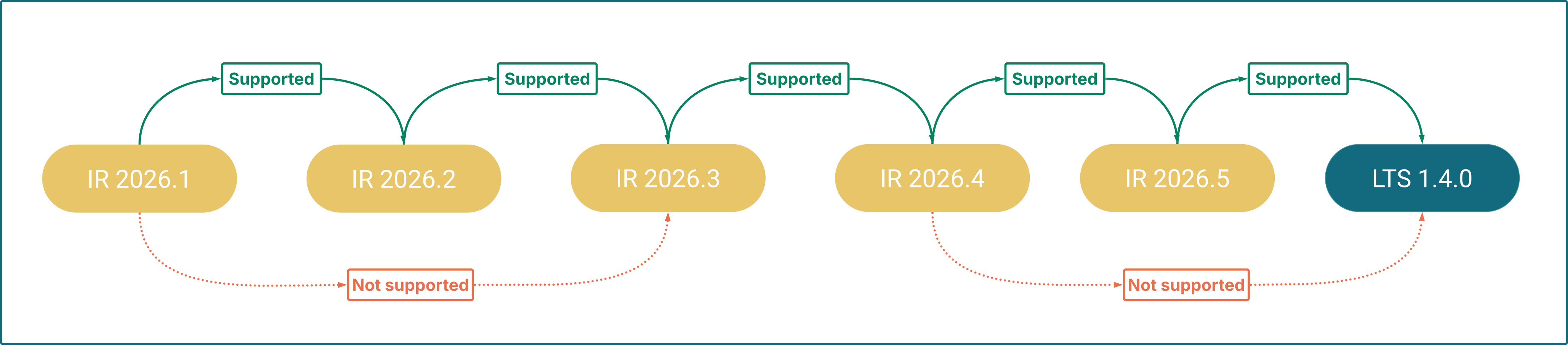
Innovation Releases follow a date-based versioning scheme (e.g., 2025.11). These releases provide the latest features and platform hardening at a faster cadence.
However, these releases are not infinite, they are designed to converge into the next Long-Term Support (LTS) minor version.
Sequential requirement: You must upgrade month-to-month within the IR stream (e.g., 2025.11 → 2025.12).
Consolidation point: Twice a year, the IR stream "consolidates." To continue receiving updates after a consolidation point, you must transition to the newly released LTS version (e.g., 1.4.0), which then serves as the foundation for the next month's IR.
LTS upgrade paths
LTS releases follow standard semantic versioning (major.minor.patch, e.g., 1.3.x). These versions focus on stability and are intended for production environments requiring a long support lifecycle.
Minor and patch version upgrades
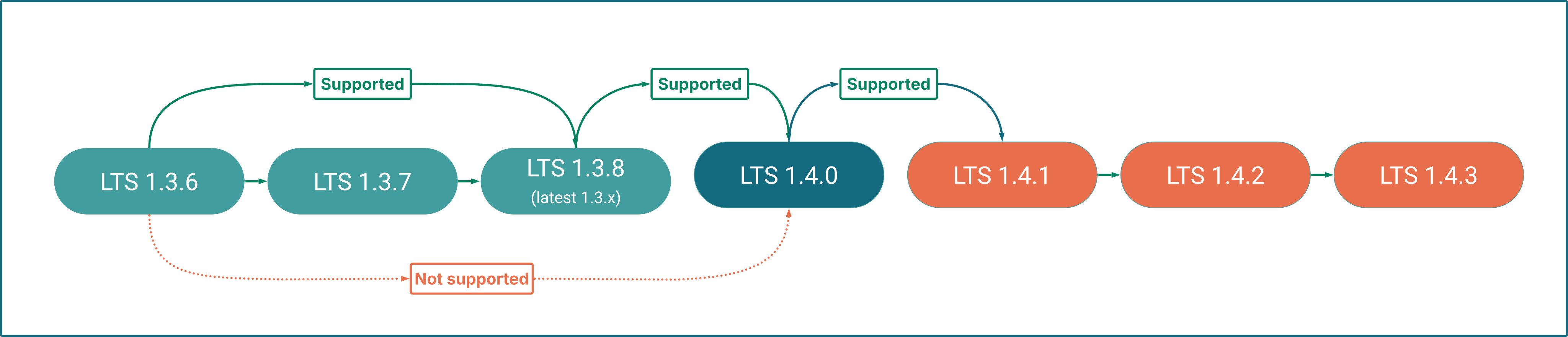
You can upgrade from one minor version to the immediate next minor release (e.g., 1.3.x to 1.4.y). However, you must first ensure you are running the latest available patch version of your current minor release before moving forward.
Within the same minor version, patch upgrades are flexible: you may upgrade from any patch version to any higher patch version (e.g., 1.3.1 to 1.3.5) without the need to install intermediate patches.
Major version upgrades
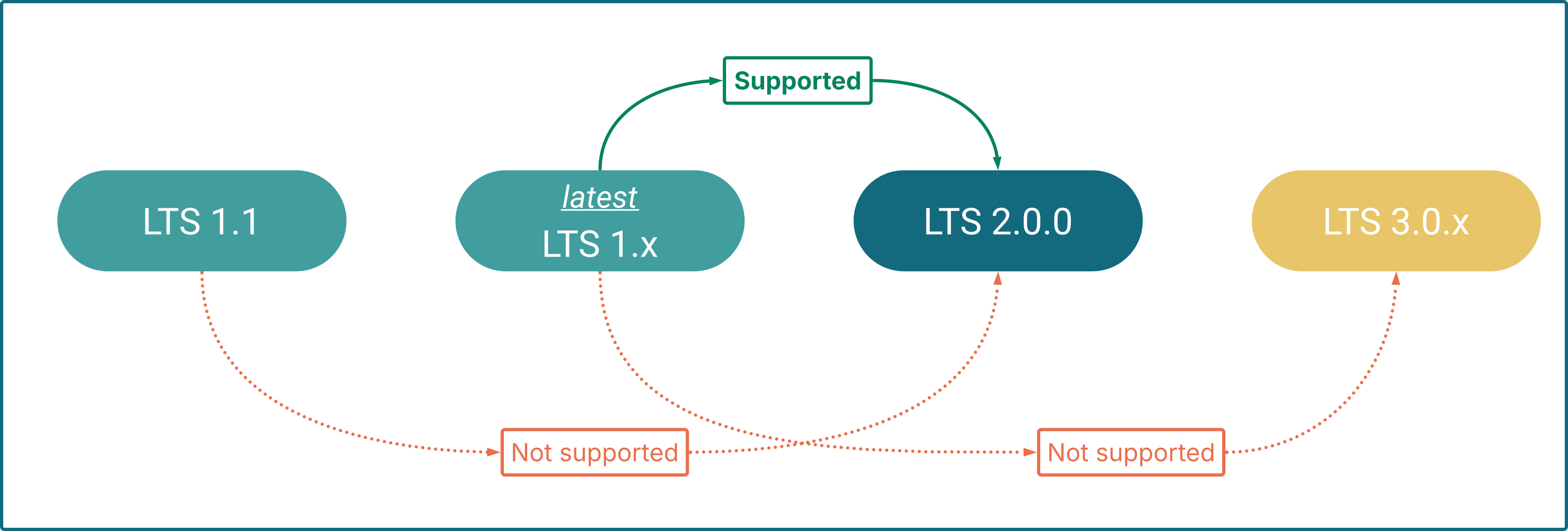
When a new major version (e.g., 2.0) is released, you must be running the latest available 1.x minor release to perform the upgrade.
Cross-stream upgrade paths
Moving between LTS and Innovation Releases is possible, but subject to specific constraints regarding version numbering and platform limitations.
Innovation Release to LTS
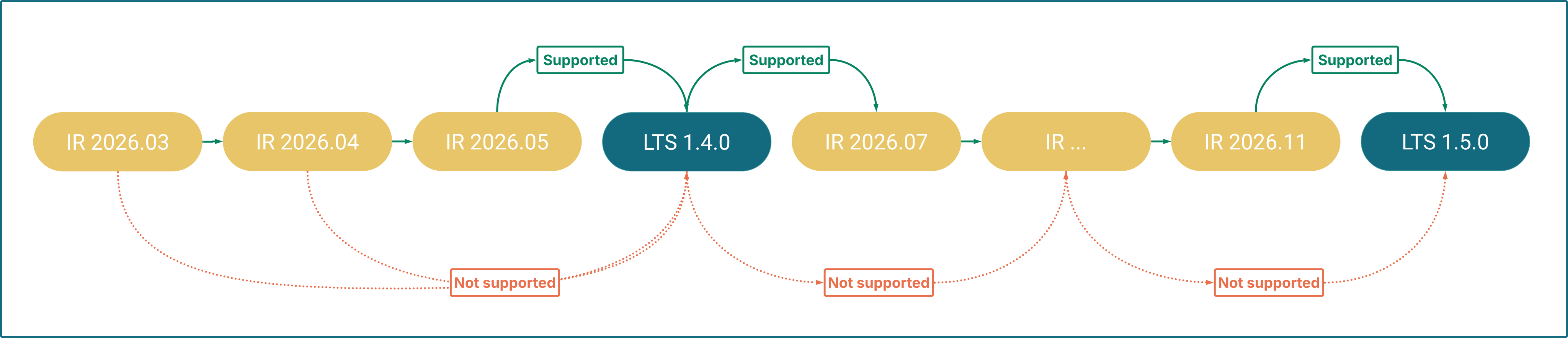
You can move from the final Innovation Release of a cycle (two cycles in a year) to the LTS release that consolidates those features, but you can't move to an LTS release from any other Innovation Release.
To determine if your current Innovation Release can move to an LTS version, refer to the documented upgrade instructions provided with each new release. These release-specific instructions will explicitly state if a version is an Innovation Release and whether it supports a transition to the LTS stream.
LTS to Innovation Release
You can upgrade an LTS release to its immediate succeeding Innovation Release.
It isn't possible to jump from an LTS version to an arbitrary or later Innovation Release. You must move to the immediate successor first, and then follow the sequential IR upgrade path.
Warning
Once you move from an LTS release to an Innovation Release, you cannot move back to an LTS release until the next consolidation point (see Innovation Release to LTS below). Consolidation points occur twice a year.
Service availability during upgrades
The impact of upgrades on your HM-managed Postgres database clusters depends on your specific upgrade path and the components being updated.
While many upgrades are designed to be non-disruptive to database traffic, certain system updates may trigger an automatic restart of your HM-managed Postgres database clusters. To avoid unexpected service interruptions, verify the specific requirements of your upgrade path.
1.2.3 to 1.3.0
Follow the step-by-step procedures for upgrading from HM 1.2.3 to HM 1.3.0.