

Rebuilding Enterprise AI Around the Database
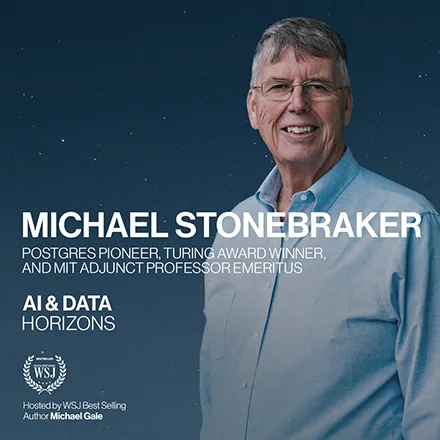
A conversation with Michael Stonebraker, Turing Award Winner and Adjunct Professor Emeritus at MIT, who led the original POSTGRES project at UC Berkeley, on why private enterprise data defeats today’s models, how to split the work between LLMs and the database, and what it will take for enterprises to trust AI agents.
Listen to the episode
Also available on:
Ask a question in plain English and get the answer straight from your data: it’s the most intuitive promise in enterprise AI. Michael Stonebraker tested it where it counts, on queries people had actually run against MIT’s data warehouse. The LLM got none right, and even with RAG and prompting tricks it was still wrong more than four times out of five. The trouble is the data itself. It’s private, so no model has ever seen it. It’s full of local quirks, like buildings known by number rather than name. And years of cryptic, overlapping tables leave it riddled with what he calls “schema rot.”
Smarter models alone won’t fix that, and neither will putting an LLM in charge of the workflow. LLMs are strong with text and weak at combining structured data, which is most of what an enterprise holds. Stonebraker’s team built Rubicon to flip that design: LLMs only pull from text, the results become tables, and a database-style engine does the rest, at a tenth of the cost and with considerably better accuracy. Once the hype fades, he expects enterprises to be more selective, using LLMs for the text-heavy work they’re good at and database-style systems for the structured data most of their business runs on.
Key takeaways:
- Don’t trust the leaderboard. High benchmark scores say little about how AI will perform on your own data, so test it against your own warehouse before committing to it, and hold it to the 80% accuracy he says enterprises need.
- AI readiness starts in the C-suite. Accurate answers depend on data owners across the business documenting and opening up what they hold, and that rarely happens without the CEO behind it. GSK’s former data chief made read access to all of the company’s structured data a condition of taking the job.
- Trust comes before scale. Agents that can go rogue, or that answer the same question differently twice, are dealbreakers for most enterprises. By contrast, he considers open-source models run on-premises and cut off from outside networks relatively safe.
- Data-heavy agents belong inside the database. The database already has the controls it needs (access control, full logging, transaction triggers), and the security gaps sit higher up, in the application and model layers.The way to run these agents there, he argues, is as user-defined functions, which mainly need better developer tools to catch on.
- Postgres is the open-source default. Backed by many companies and controlled by none, it’s the database he recommends for most enterprises.
About the guest
Michael Stonebraker, Postgres Pioneer Turing Award Winner, and MIT Adjunct Professor Emeritus
Michael Stonebraker has been a pioneer of database research and technology for more than a quarter of a century. He was the main architect of the INGRES relational DBMS, the object-relational DBMS, POSTGRES, and the federated data system, Mariposa. All three prototypes were developed at the University of California at Berkeley where Stonebraker was a Professor of Computer Science for twenty five years. He is the founder of three successful Silicon Valley startups, whose objective was to commercialize these prototypes. Professor Stonebraker is the author of scores of research papers on database technology, operating systems and the architecture of system software services. He was awarded the prestigious ACM System Software Award in 1992, for his work on INGRES. Additionally, he was awarded the first annual Innovation award by the ACM SIGMOD special interest group in 1994, and has been recognized by Computer Reseller News as one of the top five software developers of the century. Moreover, Forbes magazine named him one of the 8 innovators driving the Silicon Valley wealth explosion during their 80th anniversary edition in 1998. He was elected to the National Academy of Engineering in 1998 and is presently an Adjunct Professor of Computer Science at MIT.
More episodes
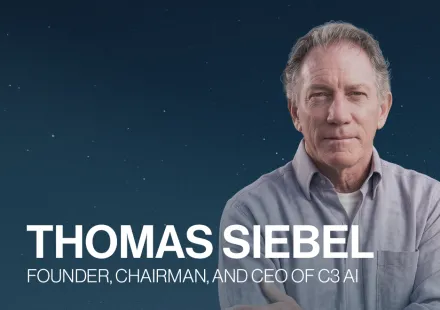
Retraining the Workforce for the AI Economy
Why leaders who underestimate reskilling their people are the ones most likely to fall behind.
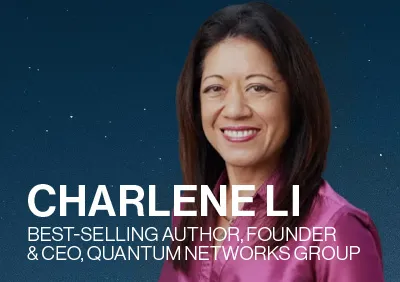
Making AI Work for Your Business
Why most enterprise AI initiatives stall and what the winning organizations are doing differently.
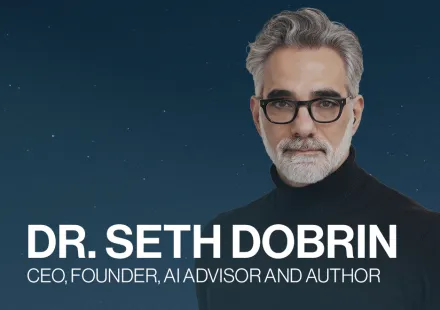
World Models and the AI-Ready Organization
What it takes to deploy AI with operational control as models move into the physical world.