
What Bruce Momjian’s Travels Reveal About the Future of Postgres

Bruce Momjian doesn’t just speak for Postgres—he listens for it, too. In cities across four continents this summer, from Charlotte to Shenzhen, he sat with students, enterprise leaders, and open source newcomers alike, each with a different story and the same shared purpose: to build something open, enduring, and free.
Postgres co-founder and community advocate supported in his work by EDB, Bruce has spent decades helping grow PostgreSQL into a global movement. But his recent travels mark a shift: Postgres isn’t just spreading; it’s becoming foundational infrastructure for a new generation of developers, governments, and industries around the world.
From ham radios and RAG models in the American South to democracy keynotes on the shores of Lake Zurich, here’s what Bruce saw and what it tells us about the future of open source and Postgres.
Southern hospitality meets open source innovation
Bruce kicked off June with a trip to Charlotte, Virginia, for the SouthEast LinuxFest (SELF). This weekend educational conference is also a social gathering for Linux and open source enthusiasts.
In his first presentation at the conference, Bruce discussed how databases can be used for AI and highlighted the advances that have fueled the AI explosion – like multi-dimensional vectors, text embeddings, semantic/vector search, transformers, generative AI, and Retrieval-Augmented Generation (RAG).
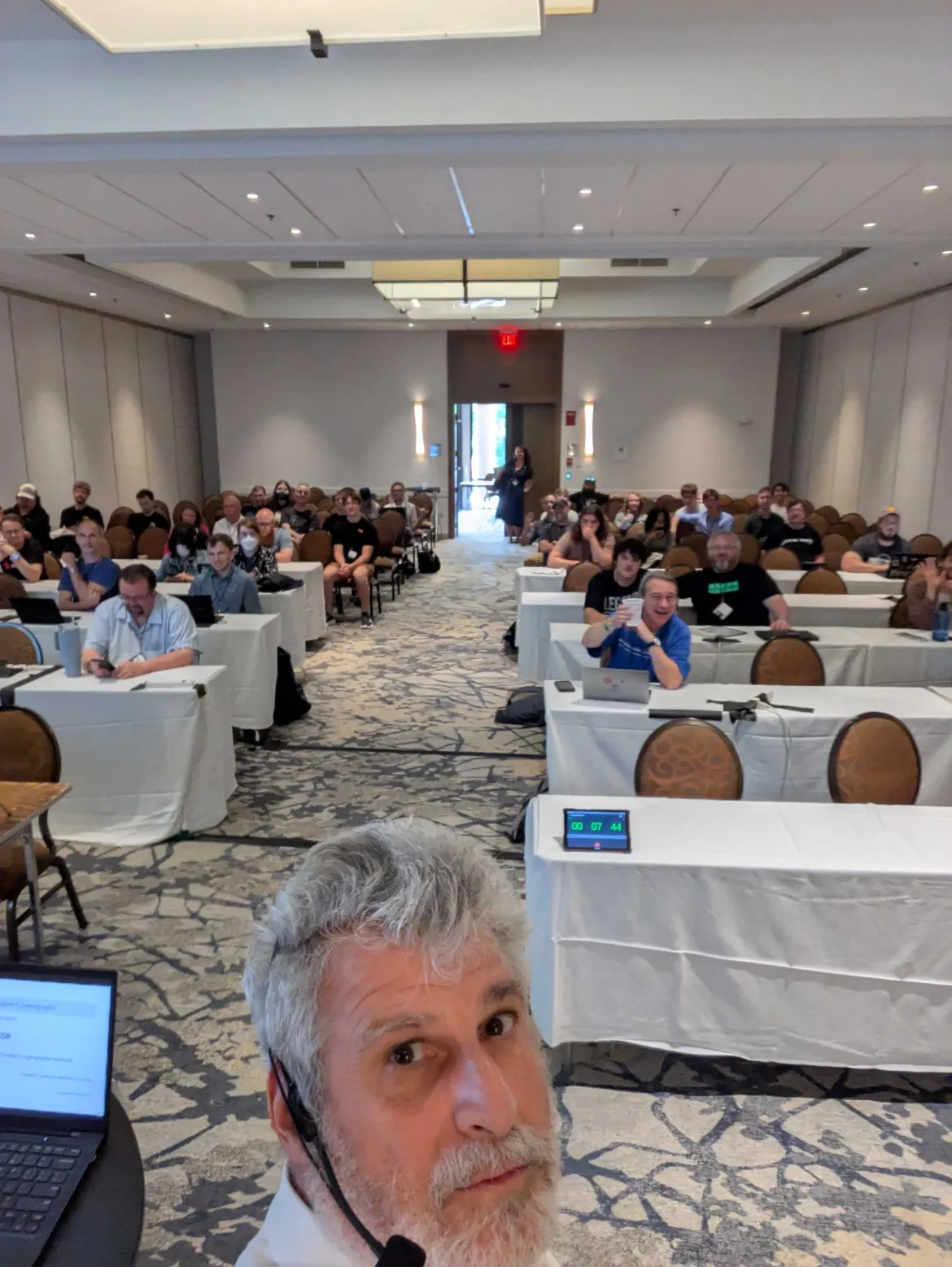
His second presentation covered the fundamentals of modern cryptography and Transport Layer Security (TLS), including popular methods of encryption, hashing, and key exchange, and digital certificates.
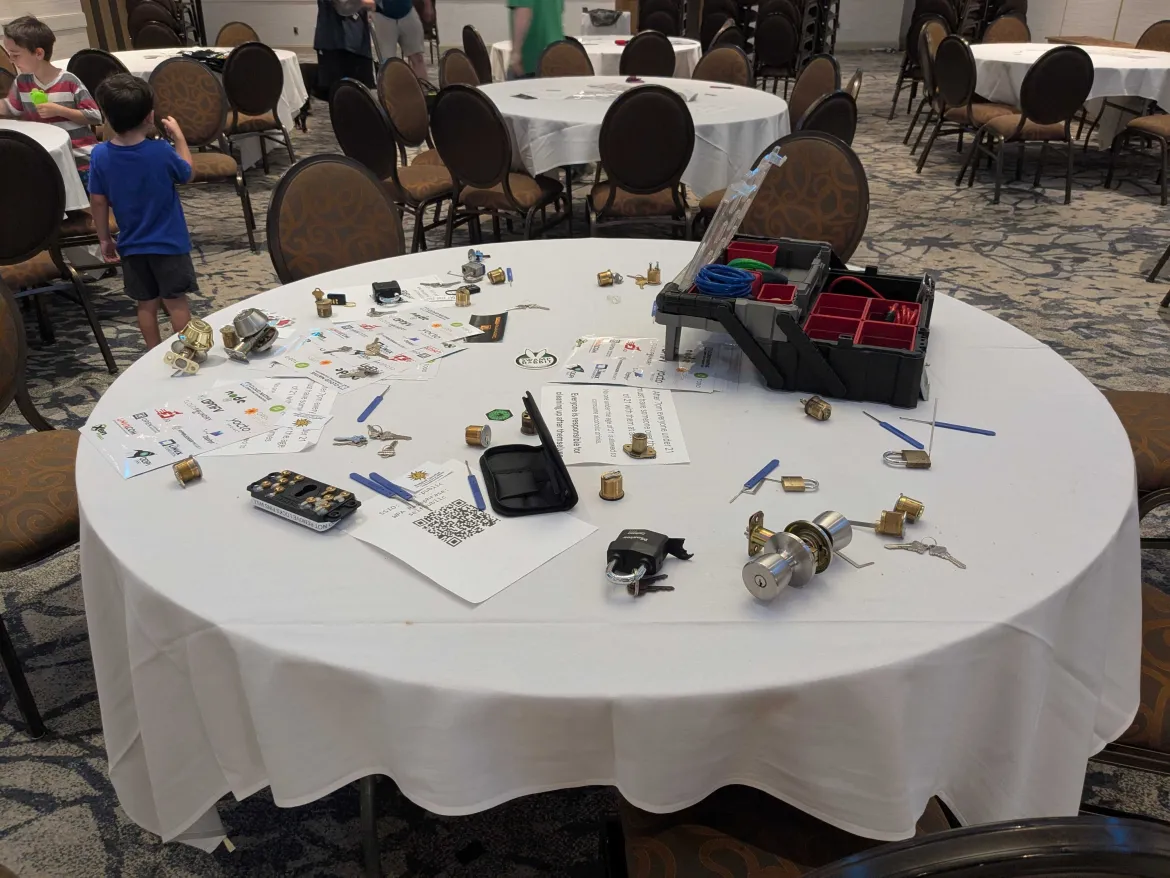
Attendees put theory into practice at SELF’s annual lock-picking table and ham radio license sessions, plus the ever-popular “geeks and guns” firing range and barbecue dinner.
Between sessions, Bruce fielded questions from attendees seeking guidance. One person expressed frustration that their colleagues ignored technical recommendations. Bruce’s advice:
“People who study the deep internal workings of software often know things others don't—but people don’t always follow their advice,” he said. “It’s better to express your opinion, then back off and wait. Perhaps they’ll realize later that you were correct.”
PostgreSQL, democracy, and digital sovereignty in Switzerland
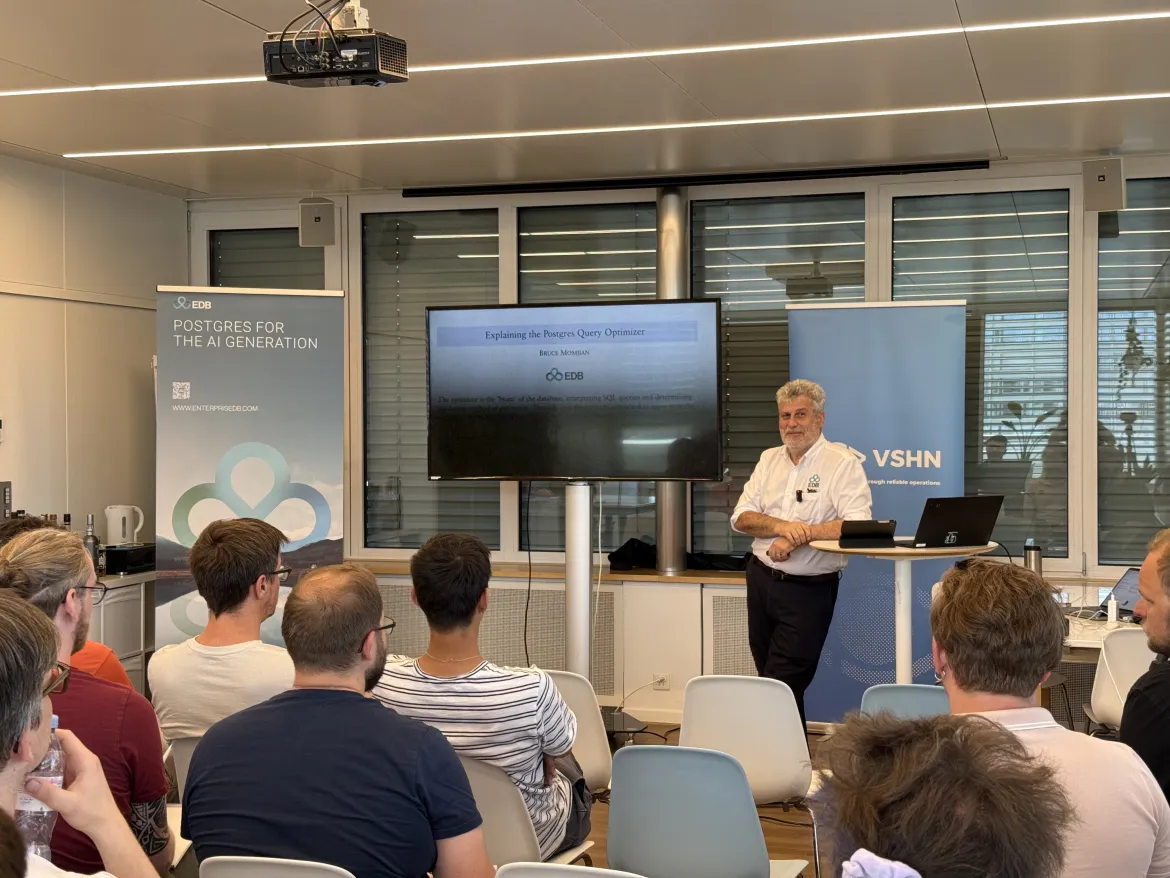
Bruce's next stop was Switzerland. He began with a visit to an EDB customer in Geneva, followed by a talk in Zurich co-hosted by EDB and VSHN, Switzerland’s first Kubernetes-certified provider. The room was packed for his two presentations, Explaining the Postgres Query Optimizer and Beyond Joins and Indexes, underscoring Swiss interest in open source precision.
The following day, Swiss PGDay took place at a lakeside university campus, where Bruce gave a keynote on Postgres and democracy. He drew parallels between open source software and democratic systems—and between closed-source software and authoritarian control.
Switzerland’s deep commitment to both democracy and data sovereignty makes it an ideal home for Sovereign Digital Switzerland (SDS), a new initiative launched by the Institute for Public Sector Transformation (IPST). SDS champions the freedom to decide where data is stored, how software is operated, and which technologies are used.
Armenia: The next open source powerhouse
In July, Bruce traveled to Yerevan for an Armenia PG User Group meeting. The event opened with remarks from Webb Fontaine’s VP of Engineering, Sargis Harutyunyan, who shared lessons from PostgreSQL Mistakes and How to Avoid Them. The foreword to the book was written by EDB’s own Gianni Ciolli, highlighting how closely knit the Postgres community truly is.
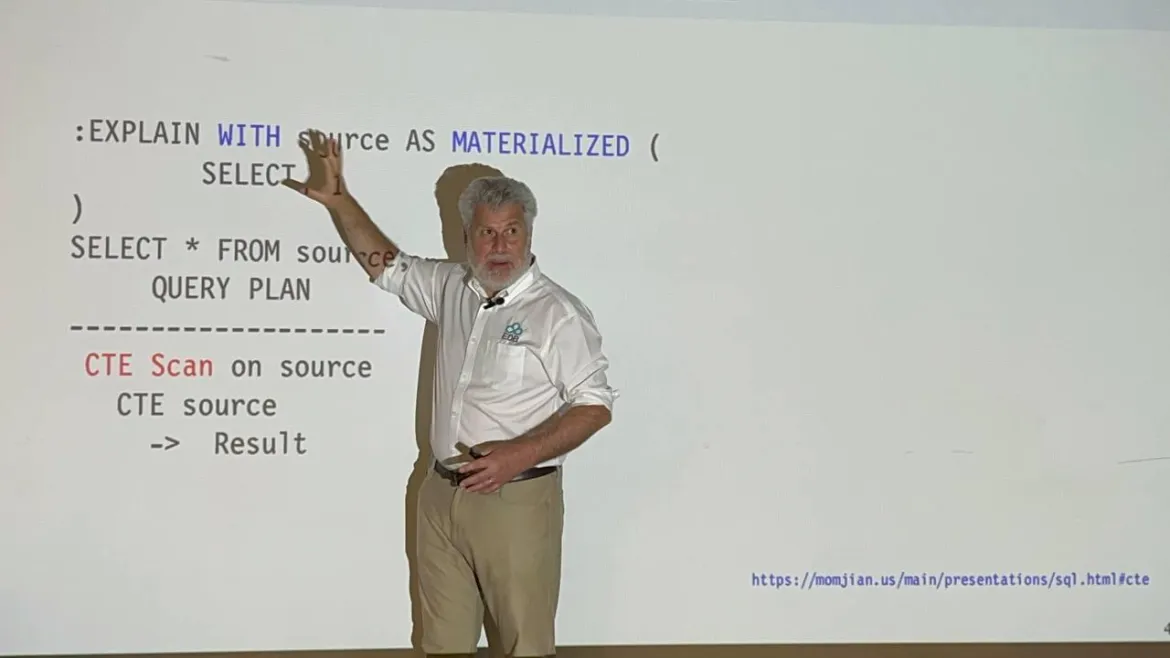
Bruce’s talk, The Optimizer from Start to Finish, covered cost-based query planning, optimizer statistics, joins, and indexes. A recurring audience question—whether the optimizer’s choices are hard-coded—gave Bruce an opportunity to explain how the system uses configuration-defined costs to compute dynamic options for every query.
He also shared why this event was personally meaningful: Bruce’s first visit to Armenia was in 2004, when he was invited by Silicon Armenia to help build up the local software industry. Today, he sees PostgreSQL playing a pivotal role in opening economic pathways for a landlocked country with limited traditional infrastructure but extraordinary technical talent.
That momentum accelerated in late 2024 when Emma Saroyan founded the Armenia PostgreSQL User Group, further connecting local developers to the international community.
Building open source bridges in China
At the end of July, Bruce visited Shenzhen for a meetup hosted by the China PostgreSQL Chapter and IvorySQL Open Source Community. He met with developers, researchers, and engineers helping shape China’s open source future and shared a presentation on Postgres’s growing relevance.
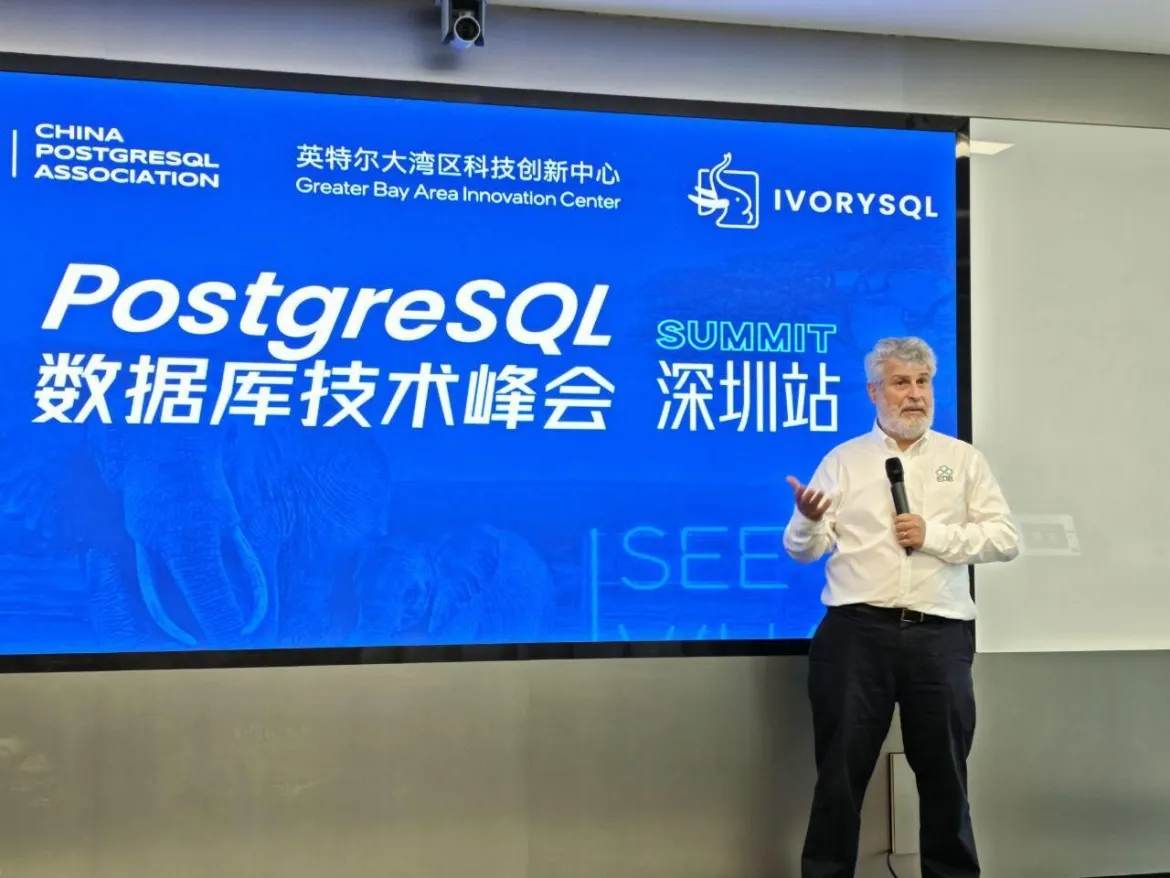
Bruce highlighted three core points:
- All other relational databases are declining; Postgres is the only growing one. Developers will continue to use NoSQL databases, but these will diminish in relevance.
- Its extendibility, long overlooked, now makes it uniquely suited for GIS, AI, full-text search, and JSON workloads.
- Postgres is immune to geopolitical sanctions because it lacks a single controlling legal entity—making it globally viable infrastructure.
He also noted a growing number of Chinese contributors to the Postgres codebase in recent years, particularly in the area of query optimization.
Open source is a global phenomenon
There was a time when software was built behind closed doors, in a handful of cities, by a narrow group of voices. Postgres helped change that.
Today, anyone, anywhere, can shape the future of data infrastructure. The stamps in Bruce’s passport don’t just reflect global adoption; they tell the story of a community that is rebuilding the world’s software foundations one country at a time.
EDB is proud to support that journey. Bruce’s upcoming stops include Mexico, Brazil, and Israel where the mission remains the same: expand opportunity, share knowledge, and help every country build with confidence on open source Postgres.
As PostgreSQL continues to evolve, Bruce’s travels remind us that the most important innovation isn’t just in the code. It’s in the people who show up to build together.
Until next time!