
Postgres®: The world’s most-loved database
EDB has been a leading contributor of code, features, and fixes to every major Postgres release since 2006, but our support for the community doesn’t stop there.
Postgres is the AI era’s native database. Its architecture made it inevitable.
With its open source license, Postgres gives organizations genuine freedom. There is no proprietary layer to negotiate around, no lock-in by contract.
Its extension model is the reason that vector search, JSON, time-series analytics, and AI workloads all find a home here. Postgres bends to meet new requirements rather than breaking under them. That extensibility is structural, not incidental.
And its reliability has been built in public, release by release, since 1996. Every performance improvement, every high-availability feature, every security hardening has been committed to a codebase that anyone can inspect.
Building the future of Postgres, together
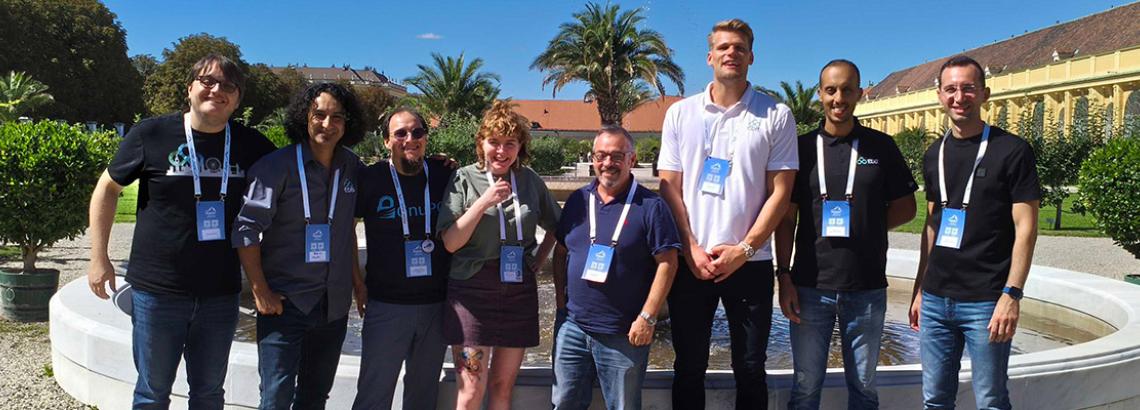
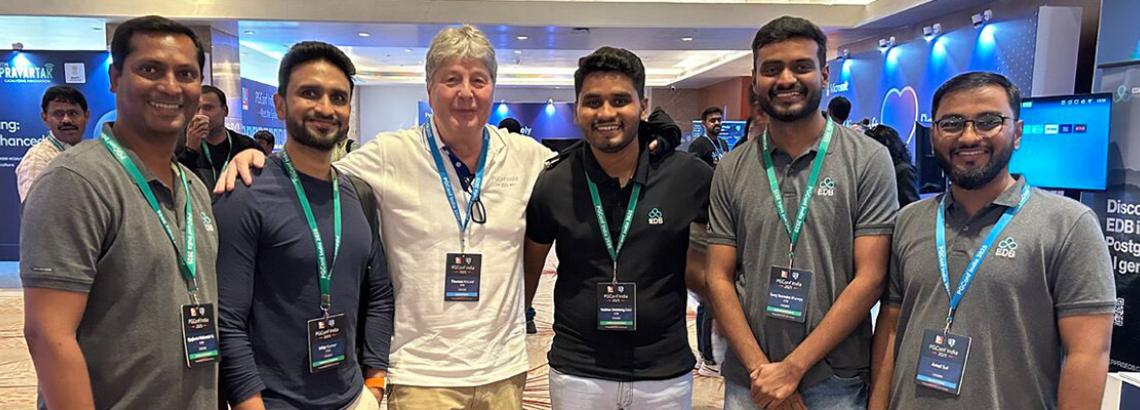
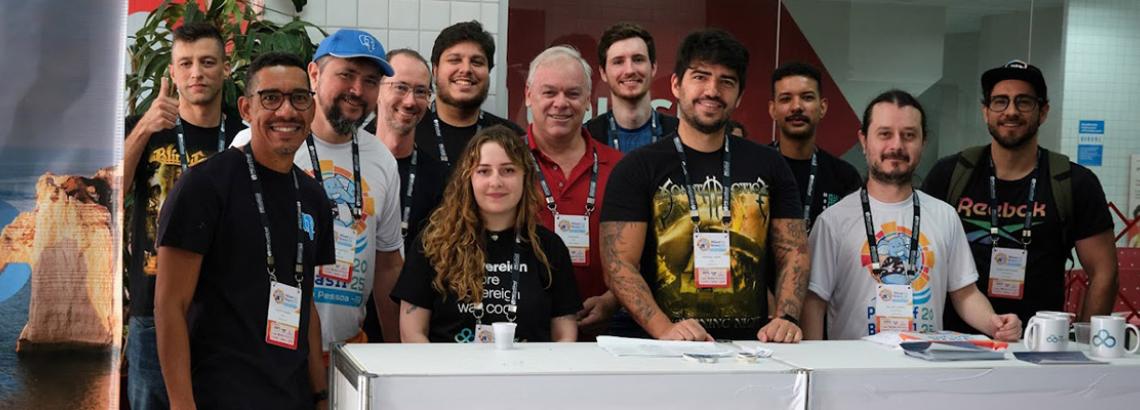
PostgreSQL’s strength comes from its community, the engineers, contributors, and organizations that have helped it become the world’s most loved, used, and wanted database. EDB is a leading contributor to the PostgreSQL community, helping to advance new capabilities, maintain key projects, and mentor the next generation of open source developers. The numbers speak for themselves. EDB has:
listed contributors
community organizers
committers
community volunteers
PostgreSQL patch authors in 2025
sponsored community conferences in 2025
speaking sessions in 2025
LOCs in PG18
Introducing the Postgres Vitality Index
Postgres has evolved from a respected open source project to the strategic foundation for modern enterprise AI. To track how commercial organizations are sustaining this global open source project, we created the Postgres Vitality Index.
Discover the data behind the Index and see how EDB remains the undisputed steward of Postgres, driving more than 30% of key contributions.
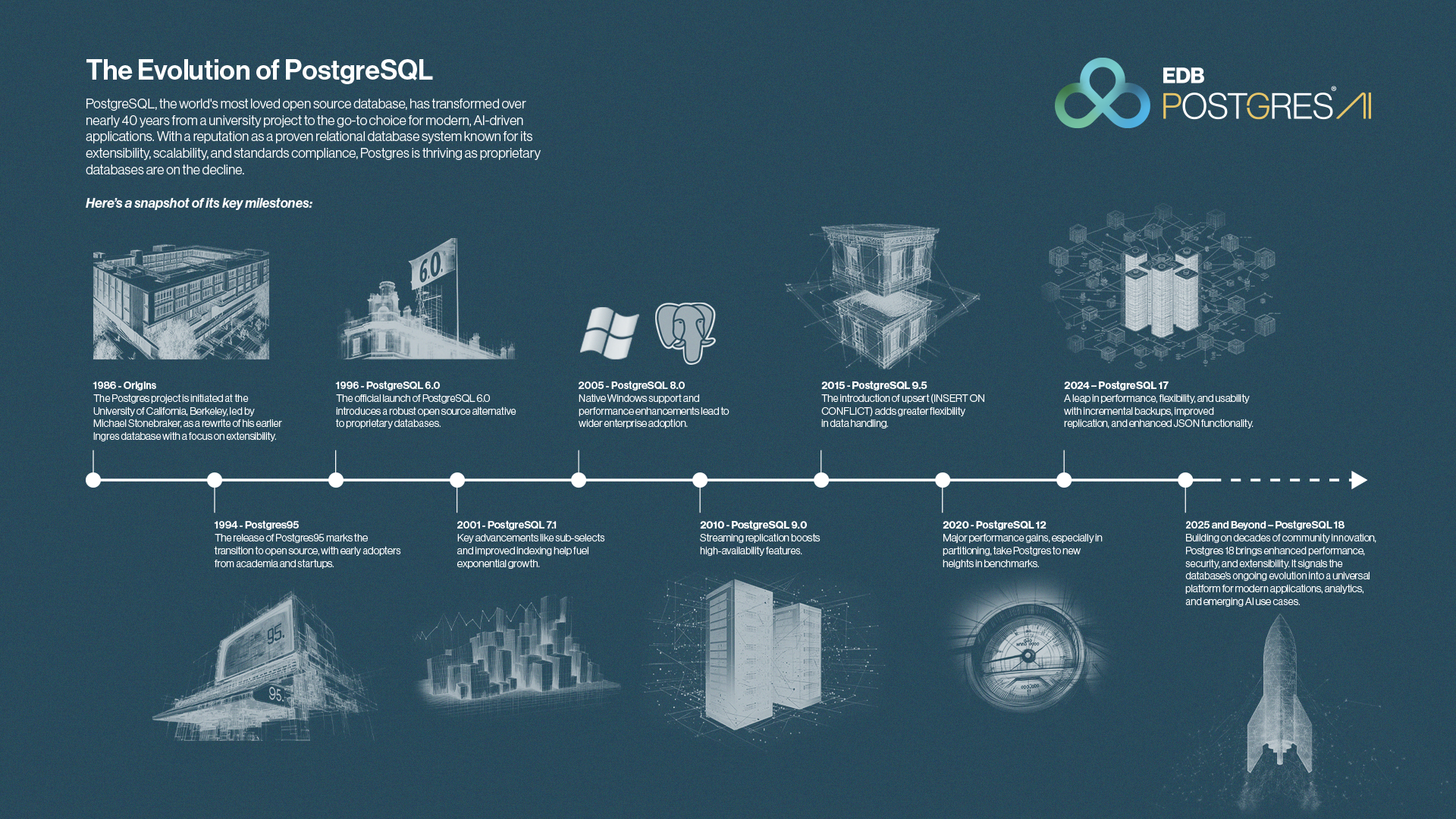
Built version by version
Postgres began as a research project at UC Berkeley in 1986, when Michael Stonebraker and his team were exploring what a post-relational database could look like. By 1996, the project had become open source PostgreSQL. By 2004, when EDB was founded, the database had already earned a reputation for reliability. EDB’s founding conviction was straightforward: Postgres would become the enterprise database standard. See an illustrated map of 40 years of open innovation and collaboration.
Postgres for the AI generation
The arc from Version 8.2 to today’s Version 18 builds to a clear conclusion. The parallel processing infrastructure, the extensibility model, the governance and security architecture all explain why Postgres is the database the AI industry reaches for. Not by coincidence. By design.
Enterprise AI requires a data system that is sovereign, observable, and built to run anywhere. That is the problem EDB Postgres AI was built to solve, on the same open foundation that EDB has been building for 20 years.
Additional open source projects we help build and support
Our commitment to open source doesn’t stop at the Postgres core. EDB maintains and contributes to other projects that make Postgres stronger, more reliable, and easier to use in collaboration with the community.
CloudNativePG™
CloudNativePg is the most popular Kubernetes operator for PostgreSQL, fully open source and community driven. Originally created by EDB, CloudNativePG is now a Cloud Native Computing Foundation (CNCF) Sandbox project, with all components available under the Apache 2 license on GitHub.
Contribute on GitHub
WarehousePG
WarehousePG is an open source data warehouse, an Apache 2 licensed fork of the Greenplum® database and PostgreSQL created by EDB. This is a strong alternative for Greenplum customers following the Broadcom acquisition and close-sourcing of the software.
Contribute on GitHub
Barman
Backup and Recovery Manager (Barman) is an open source administration tool for remote backups and disaster recovery of PostgreSQL servers in business-critical environments. EDB actively maintains Barman, which is distributed under GNU General Public License version 3 (GNU GPL 3).
Contribute on GitHub
pgAdmin
pgAdmin is the leading open source management tool for Postgres and is actively maintained by EDB. pgAdmin provides a powerful graphical interface that simplifies the creation, maintenance, and use of database objects, helping both novices and advanced users.
Contribute on GitHub
pgBouncer
pgBouncer is a lightweight connection pooling tool for PostgreSQL. It sits between client applications and the database server, managing a pool of preexisting database connections. EDB contributes heavily to pgBouncer and uses it in its own products.
Contribute on GitHub
Trusted Postgres Architect (TPA)
Trusted Postgres Architect (TPA) is an orchestration tool developed by EDB that uses Ansible to deploy Postgres clusters according to EDB’s recommendations. With TPA, you can deploy highly available Postgres nodes, including those in Kubernetes.
Contribute on GitHub
Replication Manager (repmgr)
Replication Manager is a suite of open source tools to manage replication and failover within a cluster of PostgreSQL servers. It is distributed under the GNU GPL 3 and maintained by EDB.
Contribute on GitHub
PostgreSQL Foreign Data Wrappers
Foreign data wrappers (FDWs) are extensions that allow PostgreSQL to connect to and query data from other databases and data sources as if they were local tables. To support federated queries across external open data sources, EDB developed and actively maintains FDWs for Hadoop, MongoDB, and MySQL.
PGPU
PGPU is a Postgres extension that can use NVIDIA GPUs with CUDA to accelerate certain operations in the database and/or to offload them from the CPU to the GPU.
Contribute on GitHub
Meet the people behind the code
EDB engineers contribute code, lead releases, and mentor new developers who want to join the project. You can subscribe to the EDB Engineering Newsletter to follow their work, or join the PostgreSQL hacker mentoring program to start contributing yourself.

Petr Jelinek
VP, Distinguished Engineer
“At EDB, everything is ultimately about Postgres and its users. We’re pushing database boundaries on every front, from core code contributions and community work to expanding the horizons of what Postgres can do by unifying Kubernetes-native deployment, distributed high availability, real-time analytics, and AI into a single resilient platform. I’m proud to work on many of these deep technical challenges every day with some of the smartest people I know.”

Devrim Gündüz
PostgreSQL Major Contributor
“I joined EDB in 2011, and the company has supported my community work from day one. As my community commitments grew, from packaging to conferences, EDB stayed on my side every step of the way. PostgreSQL isn't just software to me. It's my lifestyle and my family, and I'm very happy to be part of a company that shares that passion.”

Jozef de Vries
Chief Product Engineering Officer
“PostgreSQL is more than the sum of its parts contributed by individuals and companies. We understand what running PostgreSQL at scale looks like and are happy to contribute features that make the project even more mature.”

Peter Eisentraut
PostgreSQL committer and core team member; VP, Chief Architect, Database Servers
“At EDB, we are moving PostgreSQL forward in the community and for our customers. We have a great team contributing to open source development of PostgreSQL and supporting the community in many other ways. I’m happy to be among many smart and dedicated colleagues and building sustainable open source development.”

Pavan Deolasee
Distinguished Engineer
“I joined EDB in 2006 and, barring a brief period, have been with the company ever since. Throughout my tenure, EDB has enabled me to contribute to the core open-source PostgreSQL engine, as well as other open-source products like Postgres-XC and Postgres-XL. In recent years, my focus has shifted to Postgres Distributed, our flagship HA product. Additionally, I serve as one of the primary organizers of PGConf India, Asia's largest Postgres conference.”

Álvaro Herrera
PostgreSQL contributor and committer
“I’m extremely pleased that EDB supports me to continue my work on open source PostgreSQL. I thoroughly enjoy collaborating with Postgres hackers both at EDB and the PostgreSQL community at large. I have learned a lot from them over the years on all sorts of topics.”

Floor Drees
Principal Program Manager
“EDB supports my contributions to PostgreSQL, allowing me to participate in community work during my regular hours. This means I can bring valuable insights back to the company and help us show up even stronger in the community and at events. I get to work with some of the smartest people in our community, delivering real project impact I’m proud of.”
EDB Technical Blog
EDB’s developers are among the most active contributors to PostgreSQL, designing and maintaining the features that power enterprise workloads worldwide. Explore their technical blogs for hands-on guidance, code examples, and the engineering stories behind every major release.